

Reduce Energy Waste, Boost Building Safety & Aesthetics
Lighting is one of the largest sources of energy use in commercial buildings, and much of it is wasted by outdated systems. LED technology offers a more efficient alternative, using at least 75% less energy and lasting up to 25 times longer than traditional lighting.
In addition to increased energy usage and costs, outdated lighting systems often result in recurring maintenance issues, uneven lighting conditions, and insufficiently lit areas that can compromise safety. As fixtures age, properties start to look worn and inconsistent, which affects both occupant experience and how a facility is perceived. And as more states pass bans on the sale of fluorescent or similar lighting products, LED is not only becoming a preference, but a mandate.
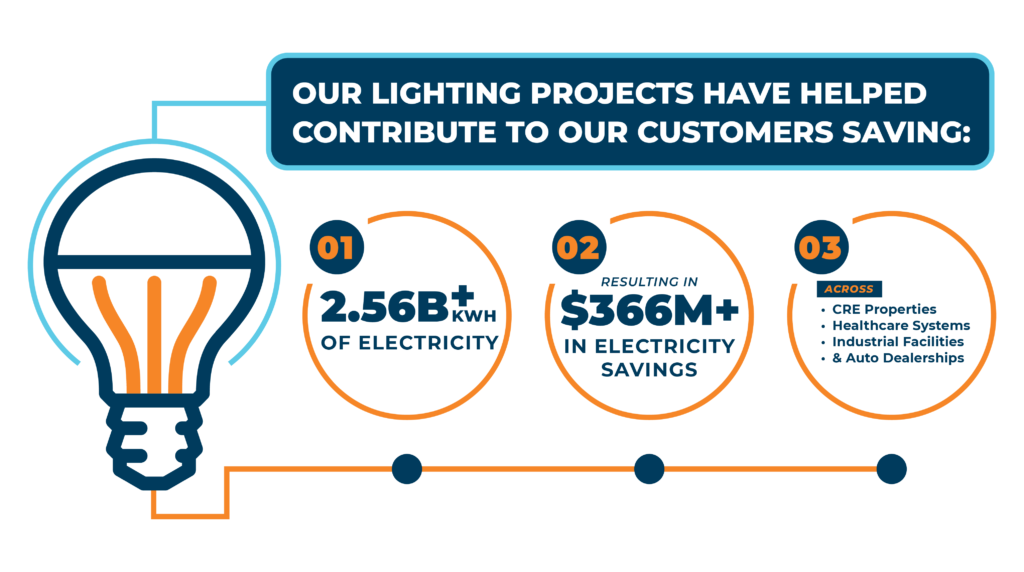
SitelogIQ helps organizations make the transition from outdated fluorescent, incandescent, or halogen lighting to LED solutions in a way that delivers real results. With hundreds of LED lighting and controls projects completed, we design and implement upgrades that reduce energy use, simplify maintenance, and avoid common rollout challenges due to inexperience.
What Are the Benefits of LED Lighting?
LED lighting gives organizations a more controlled, predictable way to manage energy and maintenance across their properties and facilities. Instead of dealing with outdated systems that waste energy and require constant attention, LED upgrades focus on improving performance and reducing ongoing operational burden.
Most LED upgrades leverage existing infrastructure rather than requiring full system replacement. Legacy fixtures are replaced with high-efficiency LEDs, often combined with controls to minimize unnecessary runtime and optimize performance throughout the day.
Businesses that invest in LED lighting benefit from:
- Lower energy costs
- Reduced maintenance and fewer replacements
- More consistent lighting quality
- Improved visibility and safety
- Better control with automation and sensors
- Longer system lifespan
- Easier compliance with lighting regulations
- Support of sustainability and ESG goals
Scaling LED Upgrades Portfolio Wide, Without Slowing Down Operations
LivCor was managing inconsistent lighting and rising maintenance costs across dozens of properties. SitelogIQ helped to standardize their LED upgrades, reduce energy use, and streamline execution at scale.
What LED Lighting Solutions Exist for Commercial Businesses?
Lighting upgrades are not a one-size-fits-all strategy. The right approach depends on how your property is used, where energy is being wasted, and what kind of lighting performance you need day to day.
Most facilities are not starting from scratch, but rather working with existing systems that are outdated, inconsistent, or simply not designed for current operations. This is where targeted LED lighting solutions make the biggest impact to operational performance.

LED Lighting Design and System Planning

LED Retrofits

Interior Lighting Upgrades

Parking Lot and Exterior Lighting

Lighting Controls and Automation

LED-to-LED Upgrades

Turnkey Installation and Ongoing Support
LED Retrofits
Interior Lighting Upgrades
Parking Lot and Exterior Lighting
Lighting Controls and Automation
LED-to-LED Upgrades
Turnkey Installation and Ongoing Support
LED Lighting Design and System Planning
Your One-Stop Building LED Lighting Partner
Here’s what you gain from our partnership:
- A turnkey partner that manages all project phases
- Comprehensive, portfolio-wide approach
- Nationwide footprint—our team has completed work in all 50 states
- Single source of accountability
- Partner advocate and marketplace agent
- Funding and incentive management—we ensure you never leave money on the table
- Centralized communication between corporate and field teams
- Rapid results—everything we do is meant to drive action for the next project step
Frequently Asked Questions
-
How long does an LED lighting system last?
Unlike fluorescent lighting, which eventually burns out and requires replacement, LED systems continue to operate but can gradually lose light output over time.
That means a system can still be fully operational while delivering less light than it did when it was first installed. Most LED products are rated to a point where they reach about 70% of their original output, often referred to as L70. At that stage, fixtures are still working, but overall light levels may no longer match the needs of the space.
-
Do I need to replace all of my existing fixtures?
Not always. Many projects focus on retrofitting existing fixtures with LED technology, which lowers costs and speeds up installation.
-
Will lighting upgrades disrupt operations?
Projects are typically phased and scheduled around your operations to minimize disruption, especially in facilities that run continuously.
-
Can LED lighting improve safety and visibility?
Yes. LED systems provide more consistent light levels, better color quality, and improved visibility in both interior and exterior spaces.
-
What are LED-to-LED upgrades and when do they make sense?
Early-generation LED systems installed 10 or more years ago often fall short of current performance standards. Upgrading to newer LED technology can improve efficiency, light quality, and reliability without a full system replacement.
-
Are there incentives or rebates available for LED upgrades?
Many utilities and local programs offer incentives that can significantly reduce project costs, depending on your location and scope.
See why customers choose SitelogIQ
Connect with Us
"*" indicates required fields